
The concept of modern Environmental Protection dates back to the Industrial Revolution in Europe and America in the eighteenth century. The rise and expansion of myriad industries and factories not only offered us a variety of commodities to facilitate and modernize our lives, but also led to exponentially rising levels of harmful pollutants as industrial byproducts, which badly affected the environment and posed threat to the balance of nature like never before.
By the middle of the eighteenth century, air pollution had reached such heights in the United Kingdom – the birth place of industrial revolution — that the British government had to pass the British Alkali Acts in 1863 to curb the extensive emission of gaseous hydrochloric acid by its heavy industries. The British civil society was fast to appreciate the threats posed by unfettered industrial expansion, and advocated against consumerism and other human whims and activities that was harmful towards nature. In the Victorian era, the “Back to Nature” movement was started. This movement was seen by many to have been a precursor the pro-environment movements of the 21st century (Rivera, 2012) . The United States also saw similar environment conservation and protection movements in that period. Records suggest one of the earliest US movements took place in the early 18th century, when Benjamin Franking, along with other residents of Pennsylvania petitioned to the Pennsylvania Assembly to remove the harmful tanneries from the commercial districts of Philadelphia. Such movements and initiatives to save the environment from degradation and destruction shaped the modern Environmental Protection movements that are fighting for a better world today like those from the EPA.
However, air and water conservation does not form the exclusive ambit of the Environmental Protection movement; animal preservation is also an important component of it. In the early 20th century, extinction of different species of animals, such as the messenger pigeon, and growing threat to the survival of many others, including the American Bison, Royal Bengal Tiger and so on has led many environment activists to work on the protection and conversation of the wild animals. The founding of the National Park Service in America in 1916 signified one of the major victories of a movement that was still in its infancy. Interestingly, the Nazi government of Germany had played a key role in conservation of animals, by enacting a strict animal preservation law in 1933. In addition, in 1935 the Reich Animal Protection Act was enacted which added to the environment protection initiatives (Glicksman, 2008).
With time, campaigns and programs to protect nature and its inhabitants have increased in volume and sophistication. The modern-day movement involves sections of society, organized NGOs, government services, and the media, all combining together to take on the ever-increasing environmental challenges in a world where we just cannot seem to be able to strike a balance between materialistic betterment of today as opposed to the promise of a better tomorrow.
Glicksman, O. L. (2008). Environmental protection, law and policy. Aspen Publishers.Retrieved from http://books.google.com/books/feeds/volumes?q=0735563489
Rivera, O. E. (2012). Business and public policy, responses to environmental and social protection processes. Cambridge Univ Pr.Retrieved from http://books.google.com/books/feeds/volumes?q=0521897815
The Best Zero Emissions Vehicles of 2012
The push for environmental sustainable solutions to the world’s ever growing energy demands has spawned a new market for zero emission vehicles and 2012 is a banner year for many of the companies that are in the race to corner a substantial fraction of the world’s green-car market. Today, manufacturers like Honda, Nissan and Ford are out-dueling themselves in creating novel car solutions towards zero emissions.
The product info listing for these cars may look like a snippet of a Star Trek movie script but make no mistake about it, these cars are here for real. You can visit website URL to check out the many technological advancements built into these futuristic automobiles because quite frankly, the world is slowly but surely catching up the hype.
In the succeeding paragraphs, we review the three best zero emissions vehicles in 2012 and what prospective car owners can expect from these vehicles.
Ford Focus 2012 Electric. The Focus is a well-known brand with a long history of victories against competing models and taking this to an eco-friendly direction only serves to enhance the myth of the Focus. The 2012 edition, short of implementing its own pressure washing system, is powered by a magnetic electric motor rated for 123hp allowing the car to run like any other car would on the highway. The base model sells for around $40,000 which is no help to the remove complaints board pleas at Ford, but is well within the price range of other competing partial emission models like Toyota’s Prius.
Nissan LEAF 2012. LEAF stands for Leading, Environmentally friendly, Affordable, family car and is Nissan’s pitch at a zero emissions vehicle that is attractive to customers. It is rated to run up to 117 kilometers on a single charge. It is all electric and has won the 2010 Green Car Vision Award and 2011 European Car of the Year award for its design and performance. You can visit project on the Nissan website for more information on this ultra attractive electric family car.
Honda FCX Clarity. Powered by a hydrogen fuel cell, the FCX is a zero emissions vehicle since 2008 up to today. The vehicle is yet to be released as a product that can be bought straight out of the market but is rather only available via lease for around $600 per month. Honda has yet to make it a fully sustainable hydrogen-cell fueled car so this is not covered by current VA loan rates but Honda’s foray into this market segment builds high hopes for the development of commercial zero emission car models in the near future. Pretty soon, you can visit your URL and expect Honda ZEV advertisements left and right; but until then, the hybrid PZEV Honda release remains to be the best bet at clean energy automobile design from Honda.
Will the electric car and its competing designs for zero emission vehicles take off? Only time will tell. The good news is that car manufacturers continue to actively pursue great technological solutions to the petroleum-dependency and emission problems. With enough time, it should be able to compete with mainstream car designs.
Answering The Call for Environmental Protection
One of the most pressing and most important issues facing the world today is environmental protection. With the advancement of large-scale manufacturing methods to supply the world’s ever growing need for products and services, the rate at which natural resources are harvested is progressing at a rate that is faster than the natural replenishment cycle for most resources. Oil wells, for example, are depleted in a matter of years while making it takes millions of years. All told, the Earth is on an HCG diet plan with the way we are extracting resources and polluting its once pristine ecosystems.
The challenge of environmental protection, therefore, is a tandem approach by scientific organizations and government policy-makers alike. It is defined as the practice of protecting the environment by individuals and organizations as well as government institutions and agencies in order to preserve the environment and humans in a sustainable manner. Its growth has been well-chronicled, beginning in the 1960s with the green earth or environmental activism movement spurred by the growing concern over pollution and environmental degradation. Since then, issues have been slowly but surely identified in order to pave the way for their resolution. The extent of these issues is such that you will need more than the services of a Carlsbad therapist to see it to the end; rather, worldwide collaboration among governments is necessary to effect the necessary change.
In the last 40 years, here are some of the issues that have been taken up in many meetings among world governments:
- The Montreal Protocol. This was the worldwide global response to the threat of chlorofluorocarbons (CFCs) that caused the hole in the ozone layer to form. A success story in global environmental cooperation, world leaders chose to sat down together, instead of lounging in villa holidays doing nothing, and signed a treaty on September 16, 1987 forever banning the commercial, residential and industrial use of CFCs. As of writing, 196 countries and states have been signatories to the Montreal Protocol raising hope that other environmental issues can be resolved in the same manner.
- The Kyoto Protocol. The worldwide global effort to stem global warming is the perfect antithesis to the Montreal Protocol, an exercise on the pullup bar rather than a lazy and relaxing flex of muscles on yoga mats. The Kyoto Protocol was designed to reduce worldwide carbon dioxide emissions to 1990 levels by 2015 but was met with major objections particularly from developed countries who argued that the implementing rules and regulations were too lax on other member countries while too stringent for others. The United States, for example, argued that China should have been classified as a developed country and must therefore be made to adopt the same stringent guidelines as the US, UK and Australia. Instead, China was labeled a developing country with less stringent emission limits creating an unfair competitive advantage in the economic and industrial sectors.Today, the Kyoto Protocol has undergone various revisions, most recently in Copenhagen, Denmark and while not every one is still on the same page on what has to be done to address carbon dioxide emissions, countries are trying to roll out their own plans and legislation for compliance. Amidst all these is the one truth that everyone can agree on: global warming has to be addressed in one way or another, else we might as well stop companies from making surf clothing with would be suicidal in the frying temperatures in many countries. As to how to go about implementing the change, that’s a story that is easier said than done.
- Air Quality. The hazy, almost grayish, orange tinge you see on the skyline of a major metropolis early in the morning is the collection of air pollutants suitably pooling together over major human populations. In the years following the rise of industries and the explosion of cars, the number of respiratory cases has quadrupled. Today, emphysema, lung cancer, bronchitis and similar disease are higher than ever before. Countless realizzazione siti web sites are dedicated to preaching about the ill effects of air pollution to little effect. While air quality measures have been enacted in many countries, it has not been able to effectively resolve the issue on air pollution. We worry more about our car insurance than the air we breathe and that says something about our priorities as a civilization.
- Ecology conservation and the protection of endangered species. According to studies by many environmental organizations such as the WWF, more species are either endangered, critically endangered or threatened today than at any point in earth’s history. Anthropogenic activities are matching the extent and impact of extinction level events in the way it is killing off various plant and animal species. Without enacting legislation to protect ecosystems, punish animal trade offenders and create budgets to raise species in captivity so they can be reintroduced later, wild species do not stand a chance of winning the fight against their survival. Little by little, more organizations have been formed to take care of ailing animal populations and a body of knowledge is slowly being built ala SharePoint hive to ensure that we can transfer the knowledge of preservation and protection to future generations.
On top of these issues, there are countless others that are also important in ensuring the continuing preservation of the earth. We cannot look beyond issues like sold waste management, water quality, and deforestation among others to give the earth a fighting chance against total and complete destruction. Today, there are more serviced offices designed to look into each of these issues although we are still far from completely turning around the environmental health of the earth.
The challenge is to keep working on environmental protection and making it a key tenet that influences any and all legislation and policy about operating business or harvesting natural resources. It is an accountability only we humans can bear and as stewards of a planet that is uniquely beautiful and fragile, there is no other time to act but now!
Why We Need to Ban Fracking
Fracking is the process of drilling for energy sources found in the shale rocks beneath the surface of the Earth. It involves the creation of explosions to shatter and crack the shale rocks so that the gases inside will be released. By inserting at high pressure water, sand, and chemicals into to the rock, gas will flow out and go directly to the head of the well. The process is carried out by drilling the rock in a horizontal manner. The process will then create new pathways for the gases. It can also be used as an extension for already existing pathways or channels. For further illustration at how fracking works, visit blog at http://www.britannica.com/blogs/2012/04/illustrating-fracking-process/.
So why do we need to ban fracking? Here are the reasons.
What’s Causing the Warmest Summer in the United States?
No one can deny that the past few years have posed unusual weather and seasons all over the world. While it is supposedly cold, new weather records reveal that there are countries that are experiencing abnormal warm weather. There are also times when it is supposed to be warm, but then rain is pouring hard or that the climate is unusually cold.
United States is among the countries in the world which has four seasons. Between the months of June, July, and August, it is considered as the summer season of US with warm weather all over the country. It is the best time to play outdoors and get fantasy football names advice from experts. Unfortunately, the country experienced a blistering heat during August which even started from the month of June. According to scientists, the persistent heat combined with below-average precipitation across the country continued a record-breaking very warm weather condition that one does not even have to go for a South Africa travel to experience a warm climate.
Many are getting concerned on the weather condition and they are starting to ask what’s causing the strange condition. While it is true that the weather has given opportunities to get outdoors or even jam with a guitar from Fender custom shop, the debate about the abnormally very warm summer has kicked off.
Many are deducing that the weather condition is brought about by global warming. Global warming has been blamed for the bizarre weather patterns all over the world. Experts and non-experts, pikavippi, other groups and ordinary people are convinced that the unusual summer climate in US has something to do with the effect of the increasing greenhouse gases and pollution over the past years. Article properties tackling about global warming has revealed that the accumulated pollutants are making the cloud cover denser, throwing the earth’s heat back to the surface instead of dissipating into space. No wonder, the planet is getting warmer and that many countries like that of US are suffering because of that.
Because many forgot to take care of their environment, all are suffering the consequences of such action. Their search for advancement and development has caused so much trouble to the natural pattern and cycle of the environment. Although they have made their lives convenient like that of virtual phone service that is of great help, what they did to the environment is now literally coming back in the form of weather abnormalities.
That is why, no matter how people in the United States would like to relax this summer having a massage with the best coconut oil, the scourging heat of the sun and the extremely hot weather condition is not comforting at all. One could really conclude that global warming is really starting to take its tool.
It Pollutes Our Water
The risks imposed by fracking are very serious. There have been numerous reports regarding the harmful effects of fracking towards water. Have you seen the videos in YouTube that showed people lighting on fire their drinking water?
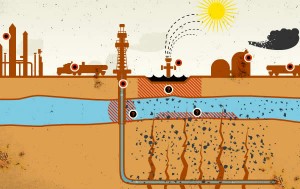 One of the risks posed by fracking is when it’s not done properly. In such cases, natural gas and petroleum would reach the aquifer and pollute it. In Wyoming alone, a breach of natural gas and petroleum polluted an area the size of 25,000 square feet. When studies were conducted on these breached areas, the full report provided that more than 30 chemicals were present. Among these chemicals were kerosene, calcium hydroxide, aluminum tristearate, and Sodium hydroxide.
The effects of these chemicals on people do not discriminate. Whether you’re just an average Joe or someone with a masters degree in nursing, or someone with ms finance, the intake of water containing these chemicals will affect your health.
An analysis of the pit solids conducted by oil and gas companies in 2007 found a new batch of chemicals. Not less than 30, it includes arsenic, benzene, pentachlorophenol, chromium, and sodium among others. It does not need a genius to tell that these chemicals are harmful. It would even be safe to assume that intake of these chemicals might result to death.
It Affects the Air That We Breath
Studies have also shown that fracking affects the air that we breathe. In a recent study conducted in a area where natural gas wells exists, chemicals particularly carcinogens were found such as methylene chloride, acrylonitrile, ethylbenzene, and benzene. Can you imagine these carcinogens traveling around the air where children to go school? Yes. Companies involved in fracking can set up camp near schools. It is even done with the permission of the school as there is money involved in it. And it has been proven that carcinogens such as ethylbenzene, benzene, acrylonitrile, and chloride can cause bloody noses, asthma, and emphysema. These chemicals or carcinogen affects everybody from toddlers to people with masters degree in project management.
So listen now and be aware of the harmful effects of fracking. You’ll never know as to who might be affected whether it be your baby or that english mastiff that you adore so much.
You can go to the internet if you are looking to download winzip free regarding information about fracking.
The Environmental Impact of Plastic and The Challenge to Addressing It
With the sheer scale of the problems pertaining to the environmental impact of plastic, there are several governments that are enacting policies to limit the usage of plastic packaging materials. Still, the scope of the problem necessitates a much broader response more than the one that is currently being seen. To this end, there have been many research papers written about the harmful environmental impact of plastic and if only everyone takes heed of the problem, then perhaps we can reverse the worrying trend when it comes to non-biodegradable trash.
To fully gain a sense of scale or the problem, consider the following documented environmental impacts of plastic. From here, we trust that you can make your own informed decisions about how best to respond to the problem of the excessive use of plastic packaging in many products.
 If you were an engineer tasked to find a durable material for packaging purposes, you would be significantly pleased with the properties of plastic. As such, the material has found itself in many applications including LED Christmas lights. Unfortunately, this very same property results in plastic being uberly resistant from degradation by natural means. As a result, plastic takes years before it can be broken down. Still, even at that instant when plastic pieces are reduced to very small sizes that they are no longer an eye sore, they continue to remain as plastic and not really degrading into anything else. That means that plastic used for a very short period continues to remain as plastic and a pollutant for many more years to come.
There are not that many available methods to dispose of plastic. The current popular practice is through a landfill and this is filling our dumps faster than we can degrade the incoming material. Likewise, burning plastics only works if you are a video game designer and you are in cyberspace creating rules for a fictional world. In the real world, burned plastic releases toxic fumes which can harm human health and damage the environment.
It is easy to include a list of other risks of the environment impacts of plastic both especially at the disposal stage.
Think of the following potential hazards:
Plastics can leach out in the soil contaminating water sources. We could be drinking contaminated water and we are not even aware of it.
Today, the various kinds of plastic impact to human health has been documented but are not yet fully understood. Still, there is ample data to suggest that plastic is responsible for various illnesses such as cancer. The next time you buy a handbag made of synthetic plastic, think about its potential effects to the environment and to human health.
The internationally recognized principle of “Reduce, Reuse, Recycle” has major implications in the fight to limit the environmental impact of plastic. Consider:
Reduce
This is the best way to combat the problems of plastic. All levels of organization, including the most low-profile umbrella company, should seek ways to minimize plastic and replace it with a more environmentally-friendly material. With innovative ways to reduce plastic production, the world would be swimming in a see of plastic in a very short period of time.
Reuse
Once produced, the use of plastic has to be pushed to the limit if we are to prevent or minimize the manufacturing of new material batches. It is not hard to understand that switching to non-plastic materials, or those that are biodegradable, will require some adjustment period not to mention some ingenious engineering. We will need to get used to home alarm systems made from bulky metal causes but before the change can be made, the available plastic has to be put to good use in every way possible.
Recycle
Recycling is the process of re-processing old material to produce a fresh batch. This serves to essential goals: one is the minimization of the extraction of natural resources, the other is the creative means to dispose of existing material. Today, more than ever, there is a need to emphasize this step and not one organization is exempt; even large companies like Lekker Energie.
The world is far every succeeding to control its plastic urges but recent trends have been promising. We have learned to respect the seriousness of the environmental impact of plastic and finding a space for it in order everyday mundane worries like which contemporary wedding photographer York to pick for a weeding.
The truth is that there are no overnight solutions to the plastic problem and we have to keep working on it if we want to continue enjoying our garden fountains that are not swimming in a sea of plastic. Science and government policies, together with consumers, should work hand-in-hand in order to find workable and viable solutions to controlling plastic production, use and disposal. It will be a never-ending effort until the day that biodegradable plastic with cheap manufacturing methods will be invented. Until then, mankind has a gargantuan challenge in its hands. Hopefully, we collectively pool together to show that we are up to it!
How to Recycle Plastic Properly
Plastic has been the main source of waste when compared to other forms of trash that we give out from residential, industrial and commercial sources. Plastic remains to be hard to decompose and light degrades them to smaller particles that infuse with our soil, water and air. These infusions cause more harm to our environment. We need to start recycling plastic to be able to cope up with the current situation.
There have been numerous campaigns about plastic recycling, the internet being a big source of this campaign. A good web design should source out this information properly. This article will summarize some of the most important ways to recycle plastic.
Re- use plastic containers
Plastic has the property of being flexible and can take many forms. Its cheap manufacturing cost has allowed companies to choose it over glass, wood and metal as container. You can always reuse these containers to whatever purpose they may serve. Example, a wrinkle cream container may serve to contain beads and other stuff that you wish to keep.
Thinking of creative ways
We can use plastic to be accessories. Plastics can easily be formed. Folders for old review materials for licensure examinations and CNA certification can be formed as structuring materials for educational projects. You can use plastic as substitute for vinyl shutters. You should be creative in this task. There a couple of ways to use plastic. Let your mind explore.
Read and find out more about their special uses
In order to recycle plastic, you should know more about its special uses. Research about the different uses in special categories, you may start with African mango reviews and find that plastic is used in agriculture. Plastic also has room in other fields, if you want to recycle plastic, do it in the most creative and unusual way that has impact. Research in bizarre applications such as sbobet, terrain a vendre, or any field that you may see useful. Plastic containers were used as lighting equipment to some third world countries; you may be able to find a special use such as this.
Use it as a source of income
Plastic recycling can be used to drive some income. If you have recently been having some loans that you need to pay up, loans such as logbook loans and payday loans that are draining your income, why not find another source of money. In this way you’ll have more drive to be creative and to recycle. When you put this out as a goal, you will surely end up with a bunch of ideas. Find the drive on how to recycle.
You can find out more about recycling plastic in sources in the internet. The backlinks service has made it possible to easily navigate to the best pages where you can find more relevant and relative information. Use this to have more coverage for your research. One source is not enough, seek out new ways.
Environmental Changes and How You Can Help
Environmental changes are basically described as being those particular changes of the environment caused by some natural processes, and they mainly refer to changes in the climate or in the biophysical environment, or the ambient.
We all know the fact that, just like second hand cars are not what they used to be, the environment is also not what it used to be hundreds of years ago. The weather has changed, it is now snowing in areas where snow was quite a miracle, it is raining during winter time in those areas where rain was only a certainty during the autumn, the ice cap is said to completely vanish by the year 2049, according to environmentalists, so we could say that the lives of our children and heirs are definitely not going to resemble the happy life of Helen Pastorino. Well, not unless we actually do something about it, that is. Learning how to protect the environment and how to better cope with all the changes that are occurring, maybe learn to keep them at a greater distance does resemble the script of a great como reconquistar um amor movie. We have all fallen in love with our planet, we can all at least imagine the normal state it was in a few years back, and we definitely need to use all of our weapons in order to see the results we are looking for, just like we would be using some dog toys to improve our dog’s behavior.
So what are the main directions we could and should follow in order to prevent these environmental changes from occurring? Start by reading some heat pump reviews and see if the electrical power these devices are consuming is really worth the effort. Sure you need all the comfort you can get, and an air conditioner might be something you cannot picture going without. But how about finding some alternative sources for your heating system? Maybe you could start cleaning your old chimney and start using your fireplace again; you should also take on the example of that San Pedro dentist you visited last week and actually do something about your isolation system, once and for all. Tons of heat is getting wasted out the cracks inside your walls and out the poorly isolated frames of your windows. You could be saving up to 5 degrees or more, should you choose to do something about it. Call a handyman to use silicone or other materials to cater to your needs, or take some time and do a little research on your own. You can also try to find some top-notch contractor leads to handle your situation.
Instead of using normal fuels that are huge pollutants, you could be using coconut oil; this oil has been proved to be a biodiesel fuel which can be used in relation with power generators and even Diesel cars.
Plus, just like a mesothelioma lawyer could do wonders for your asbestos exposure situation, which has been responsible for causing you mesothelioma, all of these environmental measures should also play the part of a great protector against the effects of climate changes. Think of your actions as some signs of drug rehab steps you are going to have to complete in order to completely eradicate your damaging actions against the environment.
Five Tips for Recycling Efficiently
As there is no dearth of colleges and universities for studying online mba programs, there is no dearth of things that we everyday pile up in our house. Often we become very irritated with these stuffs. This is because when we wish to throw them away, it seems to us that they may turn into something useful for us in future. But we keep them in our house for a longer period of time but we do not know how to use it.
As we often become very impatient with the African mango diet if it does not show any result within a shorter period of time; we also become very impatient with the left over things if we cannot use them within a short time. But there are a lot of ways that you can follow to recycle the things that you cannot use them in their actual form. Here are five tips for you following which you can reprocess different things efficiently.
Here they go:
The first tip is meant for the paper and cardboard. In terms of paper, you can recycle the magazines and the newspapers, phone books, junk mail, flyers, computer paper and so on. As different brands of used boats are renovated for reuse; those papers can also be recycled for second use in a new form. For this purpose you can take them to the paper recycle center and sell them. They make different things out of it. You can make money out of the leftover paper. In case of the cardboard, you can wash them well and dry them up and then sell if for recycling.
The second tip is meant for recycling the leftover foods. As Hyundai used cars are renovated to make them usable and attractive to the consumers; you can also recycle the food items that are left over after a party to make them edible and attractive for your entire family. As there are a lot of models of Houston Air Conditioning; there are also a lot of leftover food tips websites in the internet. You can check those sites to find out different interesting recipes and try them at home with the food that are leftover after New Year, Easter, Thanksgiving, Halloween or Christmas party. You cannot imagine how much delicious and attractive those food items become. Your family will not recognize it.
The third tip is meant for clothes. As there is no dearth of brands for rug cleaning; there is no dearth of ways that you can follow to reprocess your clothing. If you have a long dress that was meant for winter, you can cut it and give it a shorter look to make it usable in summer. As there is no scarcity of
free government cell phones users; there is also no scarcity of websites dealing with the recycling of the clothes. So, you should check them to get more ideas.
The fourth tip is meant for the plastic things. As the expert Κατασκευή Ιστοσελίδων can solve a lot of your problems regarding web design; there are a lot of recycling centers that are situated to help you out with your leftover plastic materials. You can take your plastic materials to them for reprocessing. But you need to be careful about the plastic. All of them are not good for a reprocessing. Some of them turn into harmful material. So, be sure before you go for any recycling.
The fifth tip is meant for electronic goods. As the drivers need the drivers insurance for safety; you need to be careful about glass material for your safety. But as you need to be careful for hiring the service of a coach hire company, you need to be very careful about finding out the service of recycle center. This is because often the bomb factories make use of the used glass for harmful purpose. So, you should be careful so that your leftover glasses go for something good, not for something devilish.
The Cost of Not Recycling
Recycling is one eco-friendly activity that is oftentimes not given as much attention as it deserves. Perhaps because of a lack of understanding about the benefits of recycling or simply because it is too hard to care about one’s trash, recycling appeals are oftentimes shoved to the side and as a result, we pile on trash after bag of trash and consequently reduce the potential of recycling as a viable enterprise and solution to our resource and pollution problems.
The truth is that there is immense potential in recycling activities. While many of us get pre-occupied with a top online MBA program or an executive MBA program, there are those who have ascertained the cost of not recycling and the results are no less than troubling.
According to those professionals with extensive experience in waste management, resource monetization and well vetted approval from the world’s top online MBA programs accredited by AACSB, the following will happen if we do not put more emphasis on our recycling efforts.
1. Potential depletion of natural resources within the next few decades. The pace of technology is straining earth’s resources to provide for all our needs. With every hip replacement recall or the manufacturing of trane heat pumps, vital resources are being extracted from the earth. With recycling, a bigger fraction of those material needs are being drawn from recycled sources helping to conserve resources for future generations. Now imagine if we do not recycle? More mining, more logging, a bigger demand for energy to process those raw materials… That is only the beginning of the costs of not recycling.
2. Bigger, nastier landfills. Every un-recycled amount of trash gets taken to landfills. As it is right now, landfills are being crushed under the weight of the world’s trash. You do not need top engineering schools in waste management to tell you that the growing volume of waste, if left un-recycled, will fill all the landfills in a very short time turning the world into a big giant dump of trash.
3. Higher energy costs. With the dwindling supply of petroleum products, more energy demand is never good news for anyone. The manufacturing costs of fresh raw materials are off the roof because of the tremendous energy demand to separate the resource from the other non-useful components of the trash. Conversely, recycling helps lower this cost because most recycled materials can be processed at a lower energy demand.
Consequently, a big part of the movement to recycle materials must lie in politics, specifically the need to enact legislation to give more emphasis to it. Every government entity from the coração partido to the Democrats and Republicans in Congress should look at this from the perspective of preparing for the future instead of looking at the immediate challenges facing recycling today. Many would be amiss to think of this agenda on the same urgency and importance as reforms in medical aid but unless there is a push to do that, recycling efforts will remain to be a minor trend but not a major cultural and social instrument for resource conservation and ecological preservation.
Remember, recycling spans everything; from the cocktail dresses you buy to the Criminal Justice Online degree that you complete. It is pervasive, important, urgent, and essential for the future. And when you take time to look at the numbers pertaining to the cost of not recycling, then you will undoubtedly understand why!
Five Ways to Reduce your Carbon Footprint
Recent technology has had a great impact on our life style. Ranging from the products which we procure from the market to where we dispose them; everything requires a lot of skill. The quantity of greenhouse gases which a particular entity lets out into the environment is generally known as the carbon footprint of that individual. Numerous companies have employed candidates qualified from online information technology degree programs, to keep a check on their carbon footprints.
SHRINKING THE CARBON FOOTPRINT
The easiest and simplest way to reduce carbon footprints is to plan out all the activities in advance. Planning will enable a person to use the least amount of gas or products harmful for the surroundings. Face lift creams, for example, use a number of additives which can be harmful for the ozone. Recently, a hotel in Belize banned the use of all inorganic products in its premises and this decision was cherished by many of its visitors.
Another way is to use an efficient home design which will use less amount energy and in turn save a lot of money for its dwellers. Master of public administration candidates can manage such issues with great zeal and enthusiasm. V-shaped roofs can be beneficial for snowy areas while double insulated windows will be valuable for hot areas. Double insulated windows will allow the person to insulate his or her home and will considerably lessen the usage of air conditioning. This is chiefly advantageous for large buildings due to the ever increasing business electricity rates.
Similarly, reusable water bottles should be used instead of disposable plastic water bottles. Plastic is a very dangerous material which takes ages to disintegrate. Disposable water bottles are usually recycled but some do manage to stay out of reach and pose great problems for the environment. Leading anti wrinkle creams have commented in their own personal reviews that they will be using organic packaging for their products. Lifecell review is a very good example of such a company.
Likewise, cold water should be used instead of hot water while taking showers or doing the dishes. A lot of energy is used up in heating water due to the very high specific heat capacity of water. MSW degree programs teach these techniques to their students and as hard as they may sound, they are literally as native as a click here option on a website.
Last but not the least, reduce, recycle and reuse is the foremost ingredient in the dish for reducing carbon footprints. Online family nurse practitioner programs teach amateur nurses how to use medical equipment and how to minimize carbon footprints of medical institutions. The aforementioned five elements, when combined together, lay out a framework which allows a personality to minimize his carbon footprints and gain more from less.
The Future of Recycling Technology
As there is no shortage of people who are studying in masters healthcare administration; there is also no shortage of companies who are involved in recycling things. Recycling technology has become very common feature around the world. This is an important sort of technology that has been in use for ages. Though there are a lot of people who have criticized this technology, it has not lost its appeal. Many people have expressed an alarming view about the future of recycling technology that it is going to get extinct. But this is not at all true. Rather, the growing demand of recycled things suggests quite the opposite. This technology is going to last as long as the earth goes on.
As we look into the Home & Garden Directory to know different information about home and garden; you can also have a look over the recycling technology directory to find out information about the on-going status of it. You will find how much important it has become. As people fall in love with cheat at scrabble if once they play it; people also fall in love with the recycled things once they use them. It sounds a bit strange that how recycled things can be so popular when there is no dearth of new products. Well, there are various reasons behind it.
You can have a number of evidences of this statement if you go to a website of recycled manufacturer. There you will find that the manufacturers have produced a lot of recycled materials and sold them. The number is increasing day by day. One of the most important reasons behind the popularity of recycled technology is that it has made things cheaper. If you wish to buy a firsthand thing, it will cost you a lot. But the same thing you will get in a cheaper price when it is recycled.
As people go to the debt settlement services when they are in any trouble related to debt; the people also go to the recycled materials when they are in need of better options in a cheaper rate. Recycled things look better than the secondhand things. As they are recycled using advanced technology, they lasts longer than the second hand non-recycled materials. So, they are becoming quite popular among the people as they are serving the need of the ordinary mass.
One example can be the car. In the past, before the introduction of advanced recycle technology, people used to buy the second-hand or third-hand cars. Though those were affordable, but the people had to spend a lot of money for mending them. In total, they used to cost near a brand new car. But with the advent of recycling technology, the people can get the car that is made ready for them. So, they do not need to spend money for mending the cars as they are getting the recycled things.
As we wish to get the best sort of Great Dane when we go to buy a dog; we also wish to get the best recycled thing in a cheaper rate possible. So, the future of the recycle technology is really very bright.
Three Ways to Make Recycling Easier for Your Family
Teaching your kids the value of recycling is one of the best things you can do for the environment but it is not entirely easy. Many parents find it hard try and explain how recycling can help reduce the consumption of valuable natural resources and instead resort to proper disposal of garbage as a substitute. But we digress; this is far from maintaining the true value of recycling much as free movies online is not really supportive of the local movie industry in general. Therefore, it is only necessary that parents come up with ingenious methods to make recycling easier for the family.
Here are three ways that you can depend on to help everyone in the household pick up the value of recycling so it can be deeply ingrained and outgrown as just another example advice.
1. Enlist your household to a home trash recycling program. The best way to compel the people in your household to embrace the recycling habit is if somebody monitors the output. This is best done by recycled trash collectors that regularly visit to collect the trash. This also simplifies the task of having to bring the recycled items to the Recycling Center as somebody else is already doing it for you. All that you have to do is to tell everyone in the household to stick to the routine, and to treat it seriously as many would with MPH programs so they can absorb it as a long-term habit and not just a momentary fad.
2. Use marked garbage bins in your household to continually remind everyone of the need to recycle. You can even go as far as to maintain a compost pit for biodegradable materials, and then make bins for plastic soda bottles, aluminum soda cans, and for plastic bags. It acts as some sort of action alert every time someone plans to dispose of trash and makes the habit that much more easier to follow than if you were to only recycle everything at the end of the day or the end of the week.
3. Should there be proceeds of the recycled materials, you can give these to the kids as some sort of monetary incentive to keep them going. The incentive will make them want to do it more often as it yields results for them. Oftentimes, it is the feedback of the activity that generates the most lasting impression and certainly fits that bill. Do not just settle for recommended reading or a light reminder as you would with visitor information; having a tangible and quantifiable return makes it all the more exciting for the kids.
Recycling may be easy at face value but it is certainly more complicated than that. Like online MBA programs no GMAT, it requires repetitive exposure and years of habit-forming but once you have it ingrained, you are guaranteed to see it in action in the lives of your children well into their ripe years, and that is an inheritance that is worth so much more than any material thing in the world. By teaching them recycling, you are essential teaching them to care for the world they live in.
How to Have Zero Carbon Footprint
With the global warming debate ratcheting up, what with various climate-driven calamities plaguing various parts of the world, it is no wonder that simple homeowners are beginning to inquire about reducing their own carbon footprints. Of course, the technology today means we’d have to do a lot to reduce our carbon footprint to as low as possible, if not to zero, but when armed with the proper knowledge, this is not an impossible goal. Consider the following paragraphs as your dreamweaver templates equivalent for developing a personal roadmap to minimum carbon footprint.
Take note of the following important steps on carbon footprint reduction:
1. Monitor your household energy use closely and where possible, implement methods that will allow you to generate your own energy. In temperate countries, heaters are the most intensive consumers of energy while in hotter climates, air conditioning takes that role. Before you even begin worrying about the carbon footprint impact of the products that you use including the best wrinkle creams or aisle marking products. Brush up on tips that would allow you to reduce your energy consumption from indoor heating or air conditioning. Remember that the simplest tips can actually help cut down your energy consumption by 30%, if not more and that can go a long way into reducing your carbon footprint.
2. Installing your own energy source is a great way to minimize your carbon footprint. You can start by buying solar panels that you can install on your roof. Instead of spending too much on West Coast flooring or booking an Africa safari, you would do significantly better if you invest in power generation solutions that will reduce your dependency on the grid. In the same way, opting to draw power from sources like hydroelectric power plants which do not burn coal is the best option for your household.
3. Carpooling is also an excellent way to reduce your carbon footprint. In fact, if you have the means to bike to work, that’s the best option available. You can click here to find out more about carpooling or converting to a hybrid car to solve your fossil fuel dependency.
4. The well-known tenet of the green revolution – reduce, reuse, recycle – is a great guide to help you drive down your carbon footprint. You can visit site of many environmentalism advocates to learn more about simple but effective reduce, reuse, recycle tips.
Instead of using your time to contemplate which flats to rent in Cape Town you are getting this summer, turn your attention instead on the concerns that plague the world because of global warming. Do what you can to reduce your carbon footprint to zero and help the world heal itself. Remember that the world is the only thing we can leave behind to our children. Leaving them a greener, better world begins today by being responsible with your carbon footprint and by starting within your home, you can show your kids that caring for the Earth is one priceless attribute that will always find meaning when everything else has gone awry.
Few Answers on Fracking Violations
Global Warming : A Rapid Uprising Issue
We have been hearing about global warming for years. Many of us have taken the information to heart and are making changes to our daily lives to try and make a difference to the environment, while others still pile rubbish on the landfills, use cars that omit emissions and don’t really care.
The global warming issue has sparked a huge interest in recent years, this is no surprise, we can notice the changes as ice caps are melting and weather patterns are changing dramatically. In the UK for example, there has been barely any snow during winter with warmer weather and in South Africa, they have experienced snow for the first time in decades.
As individuals there is a lot we can do to make a difference, of course one person can’t make a big difference, but if everyone plays a small part, we can reduce the impact of global warming.
Many need help in understanding what global warming is and how they can make a change. Helpful stuff is available on the internet where we can learn what changes we can make in our daily lives which will help the environment in the long run.
The first thing we can do is a very simple thing, it’s recycling. Did you know that our landfills are overflowing with waste that could just as easily be recycled with a little bit of effort. While most people have recycling offered in their areas as part of their garbage package, it’s getting into the habit of using it that is proving to be difficult.
Anything that cannot be recycled such as kitchen waste, your vegetable peelings and fruit skins can all be used to make a compost heap. Making compost is not only fantastic for your garden and offers it all the organic nutrients and minerals it needs, but it also reduces the amount of waste being dumped on the landfills. You can visit source to find out how to make a compost heap and what you need to do to make it work.
Another important step is lowering your carbon footprint and this can be done in a number of ways from using renewable energy to the vehicle that you drive. You probably didn’t realize how much of an impact you have on the environment until you realize that everything you do makes a difference.
The use of solar or wind power over the use of grid power can make a big difference to the environment and the bonus is it will make a big difference to your energy bill. Your client history with your electricity company will show a reduced use of grid electricity and you may get to a point where you can actually sell your electricity back to the grid and make some money out of it, imagine a credit on the bill rather than an amount you owe.
From hybrid cars to electric cars, there are ways you can make a difference when you head out to work each day. To reduce your impact on global warming and save money on gas, you can look online at the vehicles available, the same as you would search for Seedbox. These vehicles either run on battery power and gas when the battery runs low or on electricity alone.
Steps to Prevent Environmental Pollution
One of the most important facts to remember when thinking of environmental pollution is that it is a mission that is solely on the shoulders of man. There has never been any species in the Earth’s 4.5 billion year history which has the power and capability to destroy or create much like man has. Over the last 250 years when the Industrial Revolution happened, man has gradually re-shaped the environment well beyond what PPI claims can purport to shoulder so much so that preventing environmental pollution has become a clear and pressing mandate for man.
Fortunately, there are more than a few measures that can be taken to prevent environmental pollution. In fact, every facet of human existence, from living in serviced apartments to selecting the specific types of products we buy, can ultimately help reverse the trend of environmental degradation that has plagued nations and cities all around the globe.
To put this into context, here are the three most powerful steps that one can be taken to prevent environmental pollution at the household level.
- Reduce, recycling and re-use is one of the most important tenets of environmental preservation and conservation. Waste can be recycled and reused to reduce the usage of new and virgin resources as well as minimize the likelihood that this waste will eventually end up polluting the environment. For example, one can read reviews of green smoke electronic cigarette brand to see which ones are “truly green” as opposed to just employing a marketing tactic to attract customers. Selecting the best consumer products that preach green principles can help re-shape the mindset of manufacturers to ultimately put emphasis on recycling and reusing in order to help build a cleaner and better world.
- Energy conservation is also a very important concept in preventing environmental pollution. One should look into how to avail offer of products or services that are conscious of energy usage. Today, the energy sector is one of the most obvious culprits for air pollution as the burning of fossil fuels lead to emission of hydrocarbons which pollute the atmosphere. Energy conservation can help reduce the need for power generation ultimately lowering the pollutants that are released to the environment. Likewise, it may also prove helpful if households take their own steps to generate their own energy via solar cells. One can hook-up with a green energy expert online via free video chat to discuss possible ways for households to generate their own energy.
- Opting to use products that are based on natural ingredients will prove more helpful to the environment than products with synthetic and artificial ingredients. These artificial ingredients will eventually be thrown away leading to pollution of local bodies of water which in turn leads to serious problems like water scarcity and loss of productivity of the seas and oceans. Natural ingredients stand a better chance of being absorbed by the environment with no serious consequences versus using artificial compounds.
Let’s now wait for Mother Earth to launce a case in vendita against the human race. We’ve seen how that can be devastating for mankind. Moreover, we only live in a planet that is nothing but irreplaceable; we don’t have anywhere else to go once the Earth is completely destroyed. We will come to suffer and our children to if we do not take the necessary steps to prevent enviornemntal pollution.
That challenge rings true today. What are you going to do to heed its call?
Importance of Recycling
When it comes to being eco-friendly and living a “green” lifestyle, fewer things are more important than the concept of recycling. It’s almost impossible to talk about green living without taking into consideration the importance of recycling, not only as a habit but as a sustainable concept that is designed to help mankind move forward. To learn more about recycling, here is a short listing of the areas where recycling creates the biggest impacts.
- One of the most important benefit of recycling deals with waste reduction and solid waste management. The world generates a significant tonnage of waste on a daily basis. Between the wastes from residential establishments to those from commercial and industrial sources, the world’s landfills quickly get overwhelmed. For example, when you buy Kratom, you inevitably have to throw the packaging away resulting in waste. Recycling is an essential and proven way to take the waste away from the landfills and other disposal locations by re-processing it instead and using it for new products. With it, the world seems a lower waste volume helping to prolong the life of landfills.
- The second point on the importance of recycling pertains to the conservation and preservation of natural resources. Everything that we produce comes from natural resources, one way or another. This is done through mining, harvesting from forests, growing crops or caring for livestock. Recycling allows us to take advantage of what is already harvested so the ultimate usage of fresh resources is minimized. This